
A Digital Monument, and the Artist Who Refuses the Rules
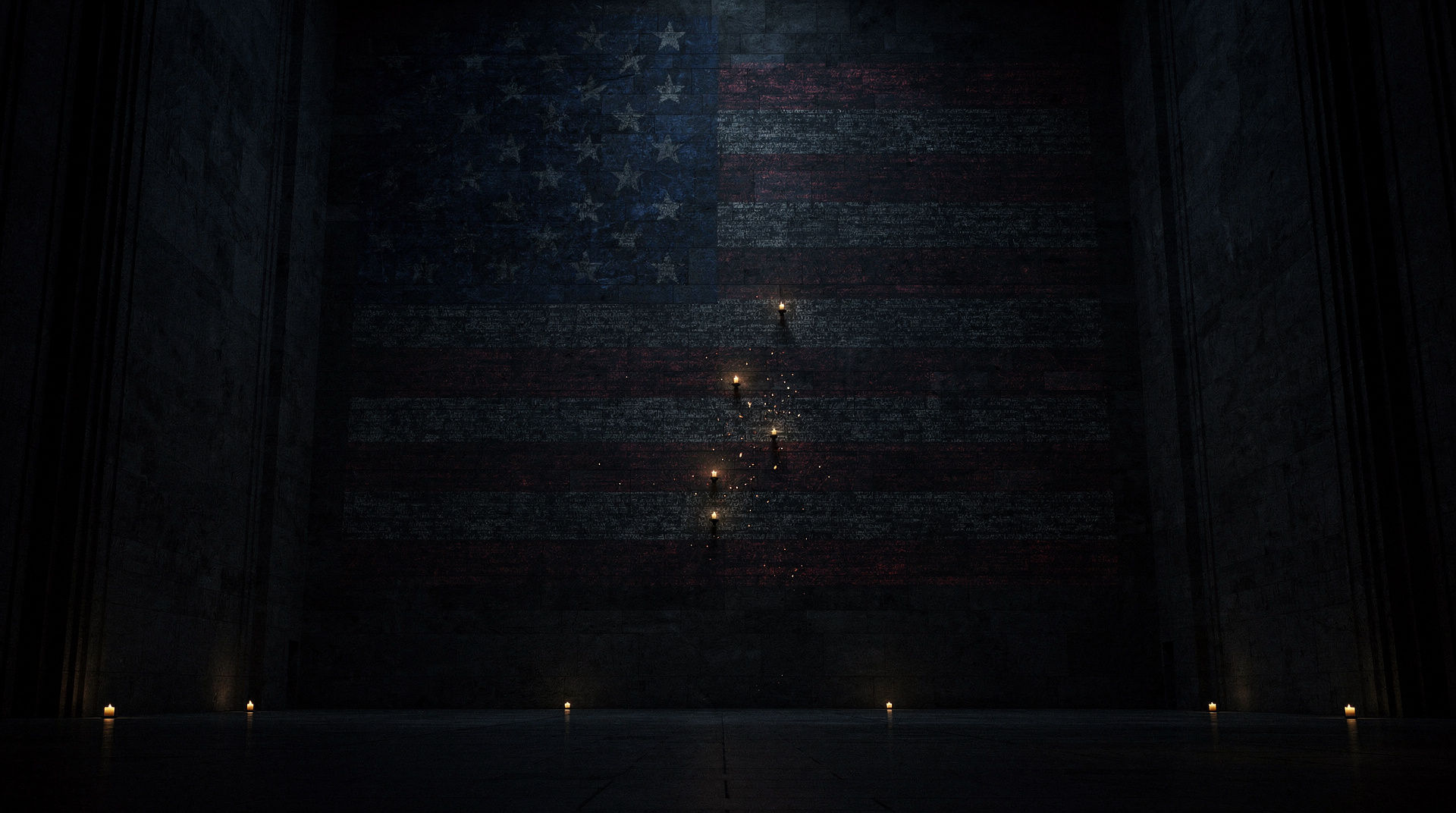
There is a wall beneath usa.country. It holds room for exactly fifty names, one for each state of a nation the whole world watches, and when the fifty are filled it closes forever. This is Fifty, the re-conceived work of the Swiss conceptual artist W. T. Falscher — and to understand why it matters, you have to understand a man who has spent his career breaking the two sets of rules almost everyone else obeys: the rules of the internet, and the rules of the art market.
The Artist Who Breaks Two Sets of Rules
Falscher works in net art — the intersection of language, perception, provocation and digital space. His pieces are not made to hang quietly on a wall.
They demand room. They interrogate the mechanisms of the internet itself: our restless hunger for instant attention, and our stranger hunger for digital immortality. Alongside Fifty he has declared a movement he calls Trumpicism, whose single rule is disarmingly simple — show a thing, and name it falsely.
The gap between the honest image and the lying caption is the work. Once you have seen that gap, you begin to see it everywhere, which is precisely the point.
Fifty applies the same unflinching clarity to a different subject: the wish to outlast oneself. The structure is almost brutally plain. A digital wall. Fifty places. No fifty-first, ever. And a price — one million dollars each — that is not hidden or negotiated but declared, in the open, as part of the work. The plainness is not a lack of ambition. It is the ambition. Falscher strips the gesture down until nothing decorative remains, and what is left is the bare mechanism of the thing: money, ego, and time.
You Do Not Buy the Work — You Complete It
The crucial move is what the artist calls completing the work. You do not buy an advertising slot on usa.country. You complete a piece that does not yet exist in finished form. Until the names are there, Fifty is only empty places and a promise — a monument waiting for the people who will make it a monument. Each participant is not a customer but a component; the artist built the frame, and the fifty are the picture. This is what separates Fifty from a billboard, or even from a donor wall in a museum. A donor wall commemorates deeds done elsewhere. Here, being named is itself the act. The name is not the record of the deed. The name is the deed.
Beneath the mechanism lies something very old. Every civilization has reached for permanence in its own material — names carved into temple stone, chiselled into foundation walls, cut into bronze meant to outlast the hands that cast it. Fifty is that ancient gesture, transposed onto the one monument our own age actually attends to. Not stone weathering in a field no one visits, but light, beneath a name the entire world already carries in its head. In an era when nearly everything online is engineered to vanish — feeds that disappear in seconds, servers quietly switched off — Fifty attempts the opposite.
It reaches for weight. For duration. For the gravity we once reserved for cathedrals and cenotaphs.
From the Million Dollar Homepage to Fifty
It has an ancestor, and Falscher does not hide it. Two decades ago, the Million Dollar Homepage sold a grid of pixels to anyone who wanted one, and became a small monument to the early, chaotic optimism of the web. Fifty is its descendant, turned inside out: where the Homepage was cluttered, commercial and open to all, Fifty is minimal, ceremonial and closed to all but fifty. The pixels sold space. Fifty sells permanence. One was a marketplace. The other is a monument.
There is also a quiet alchemy at the centre of it. Money is the most liquid, most forgettable thing we own — it flows away, it is spent, it is replaced. Permanence is the least liquid thing imaginable. Fifty proposes to convert one into the other: a sum that would otherwise disperse into the ordinary current of a life, fixed instead into a name that stands after the life is over. Whether that conversion is noble or absurd, Falscher will not say. The work states, in its own voice, that whether it honours those who pay or reveals them is left deliberately unanswered. That refusal is the heart of the piece. Fifty is a mirror held up to the impulse it satisfies, and each name that appears becomes its own answer to a question the artist declines to close.
And this is where the unfinished nature of the thing becomes its strangest strength. A completed monument stands inert in the landscape. An unfinished one is alive. Every name that joins, over months or years, alters the energy and the meaning of the whole. Picture a digital epicentre: at the beginning, an empty, monumental structure; with each person who inscribes their name, a new chapter written. Slowly an unlikely community of fifty individuals takes shape — strangers bound by nothing except this address and the shared decision to become part of the monument. The website itself becomes a performance, one the world can watch in real time, as digital eternity is formed a single name at a time.
The Address No Market Can Price
Now the provocation, and Falscher would insist on it. The domain usa.country may itself be unsellable — not because it lacks value, but because its value cannot be counted. The brokers who trade in web addresses could not name a figure; their speculative guesses ranged from a few thousand dollars to some undefined X, which is another way of admitting they had no idea. An address that the market cannot price is, in a sense, an address the market cannot sell. And here is the beautiful problem the work inherits: if the domain beneath it is unsellable, what exactly is a place upon it worth? One million dollars looks, to the ordinary observer, like a utopian joke. Perhaps it is. Or perhaps a million is simply the first honest number for a thing that has no price at all — the number you write down when the truth is that it is not for sale, and never was. Fifty may be, in the end, the only artwork whose subject is its own impossibility:
a monument you cannot buy, beneath an address no one can sell, offered at a price no one can justify. Which is exactly why the fifty who say yes will have understood something the market never could.
Free to experience. Yours to own. W. T. Falscher's net art is free — visit usa.country, see the work, let it stand. To become part of it is another matter, and enquiries are made through the office of W. T. Falscher.